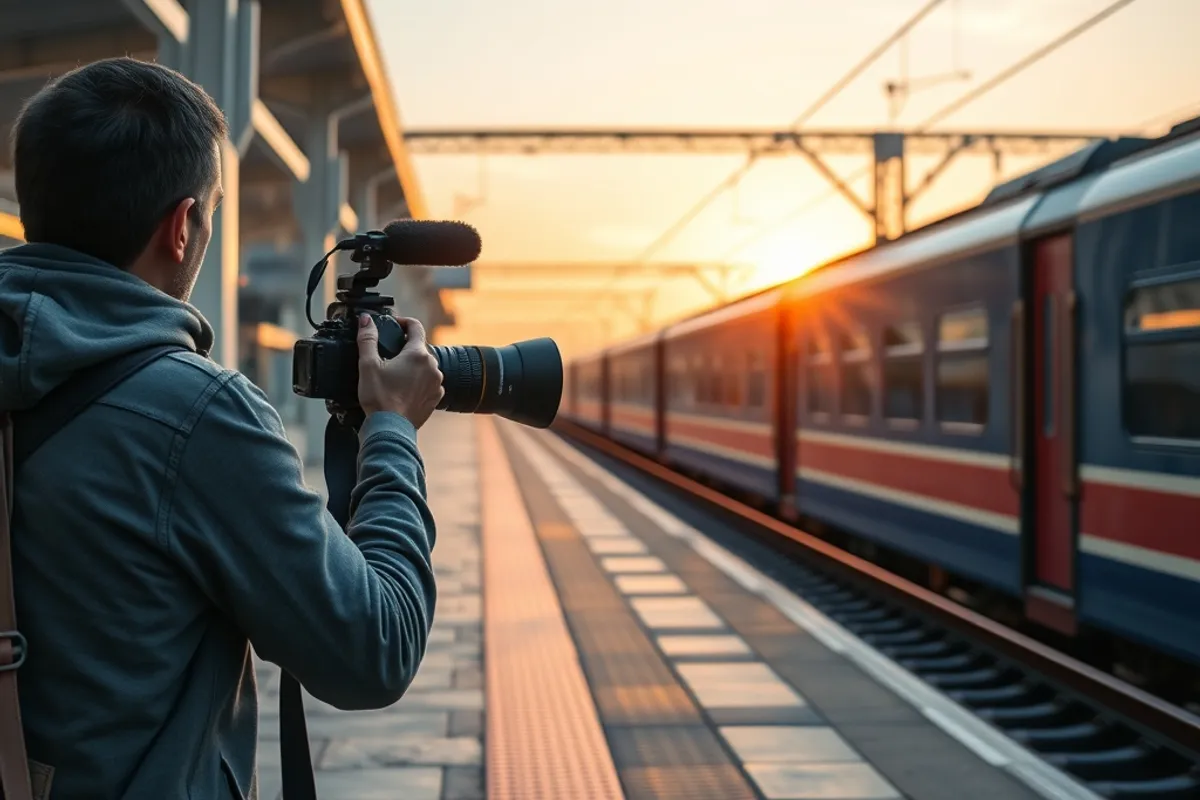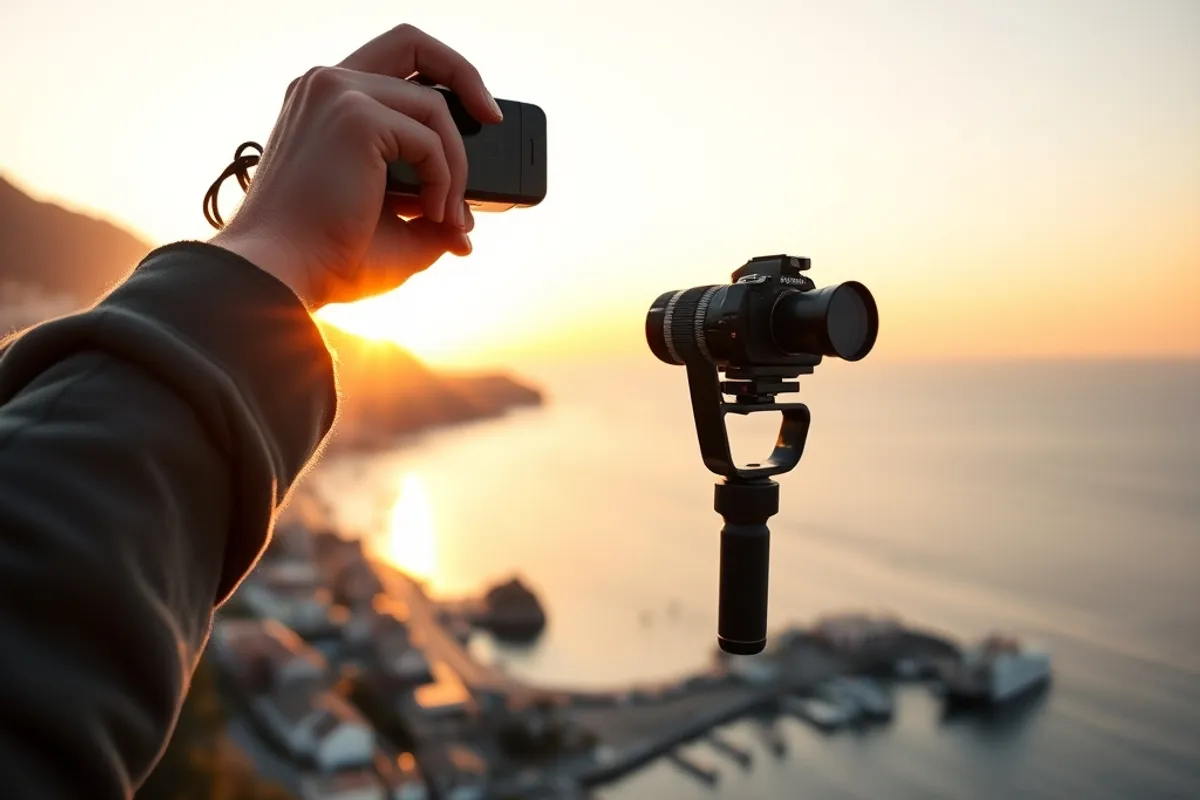
Travel vlogging has grown up. The days of hauling a full-frame body, three lenses and a gimbal around a city are over for most creators, because phones and compact cameras now shoot footage that holds up on a large screen. The kit that survives a real trip is the one you will actually carry at 6am on day nine.
Start with the output. If you publish 1080p vertical clips for social and a weekly 8-minute film, you do not need cinema glass. You need clean audio, stable framing, enough power for a full day and a bag that does not scream camera. Everything below serves those four jobs.
Key facts
- A reliable mirrorless body with a flip screen costs $700 to $1,600 in 2026.
- Audio matters more than resolution; a $120 lavalier outperforms built-in mics in every street scene.
- Two spare batteries and a 20,000 mAh power bank cover a full shooting day.
- Fast cards (V30 or better) prevent dropped frames in 4K.
- A complete carry-on vlogging kit should weigh under 4 kg.
The camera body and lens that earn their place
A current APS-C mirrorless body with a flip screen and decent autofocus is the sweet spot. Look for 4K at 30fps without a crop, a microphone input and USB-C charging. That combination covers walk-and-talk shots, interviews and the odd low-light market scene without a rig.
One lens is usually enough: a 16-50mm kit zoom or a compact 23mm prime. The zoom is more flexible in crowded streets, while the prime teaches you to move and looks sharper in low light. Add a clip-on wide converter only if you shoot a lot of scenery from arm length.
Audio: the part viewers forgive least
Viewers will tolerate soft footage. They will not tolerate wind roar, traffic wash or a voice that sounds like it is coming from another room. A wireless lavalier system with a fuzzy windshield is the single best upgrade you can make, and it costs less than a second lens.
Record a room tone at every location: thirty seconds of silence with the mic live. It gives you material to smooth cuts in the edit. Also monitor with headphones while you shoot. If you cannot hear yourself clearly through the headphones, the audience will not either.
Power, cards and storage
Two spare batteries, a 20,000 mAh power bank and a short USB-C cable solve most power problems. Charging from a power bank while the camera sits in your bag between shots keeps the day alive, and USB-C means one charger for phone, camera and mic.
Buy cards you trust at V30 or faster, and carry two smaller cards rather than one huge one. Rotate them each day so a failure costs one day of footage, not the trip. A small SSD and a phone adapter let you back up to two places before you sleep.

Nobody finishes a travel video because the picture was sharp. They finish it because they can hear it.
Support: tripods, gimbals and clamps
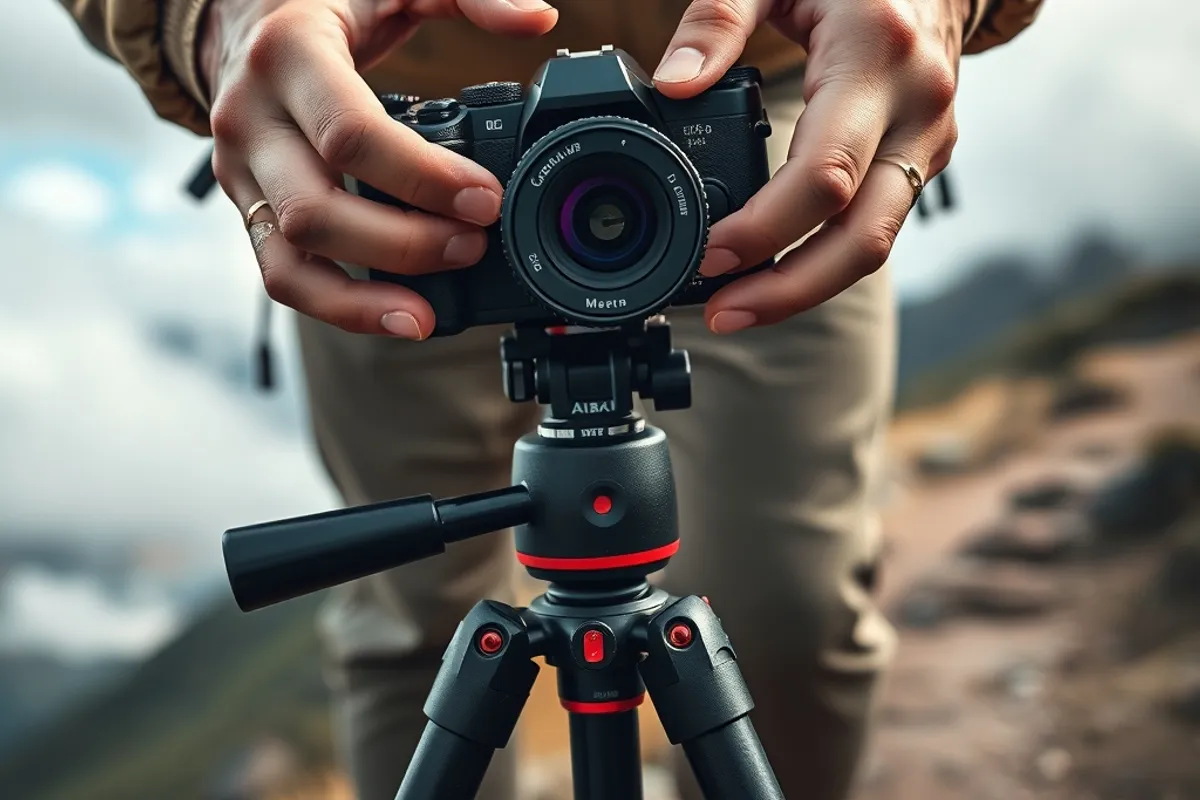
Most travel films need three supports: a pocket tripod for static shots and timelapses, a lightweight travel tripod for interviews, and a clamp for railings and cafe tables. A gimbal is a luxury unless you shoot long walking sequences; modern stabilisation handles the rest.
Buy a tripod that folds to 35cm or less and holds at least 2kg. Check the plate fits your camera without tools. A tiny flexible tripod is worth keeping in a side pocket for the shots you almost skip because setting up feels slow.
The bag, weather and insurance
Choose a plain-looking daypack with a padded insert rather than a camera-brand bag. It draws less attention in busy markets and looks normal in a cafe. A rain cover and a few silica packets cost little and prevent the slow damage that kills lenses.
Insure the kit for replacement value, not resale value, and keep serial numbers in a cloud note. If your gear is worth more than a month of your travel budget, the policy is not optional. Register the purchase so a claim does not stall on paperwork.
The kit we would buy
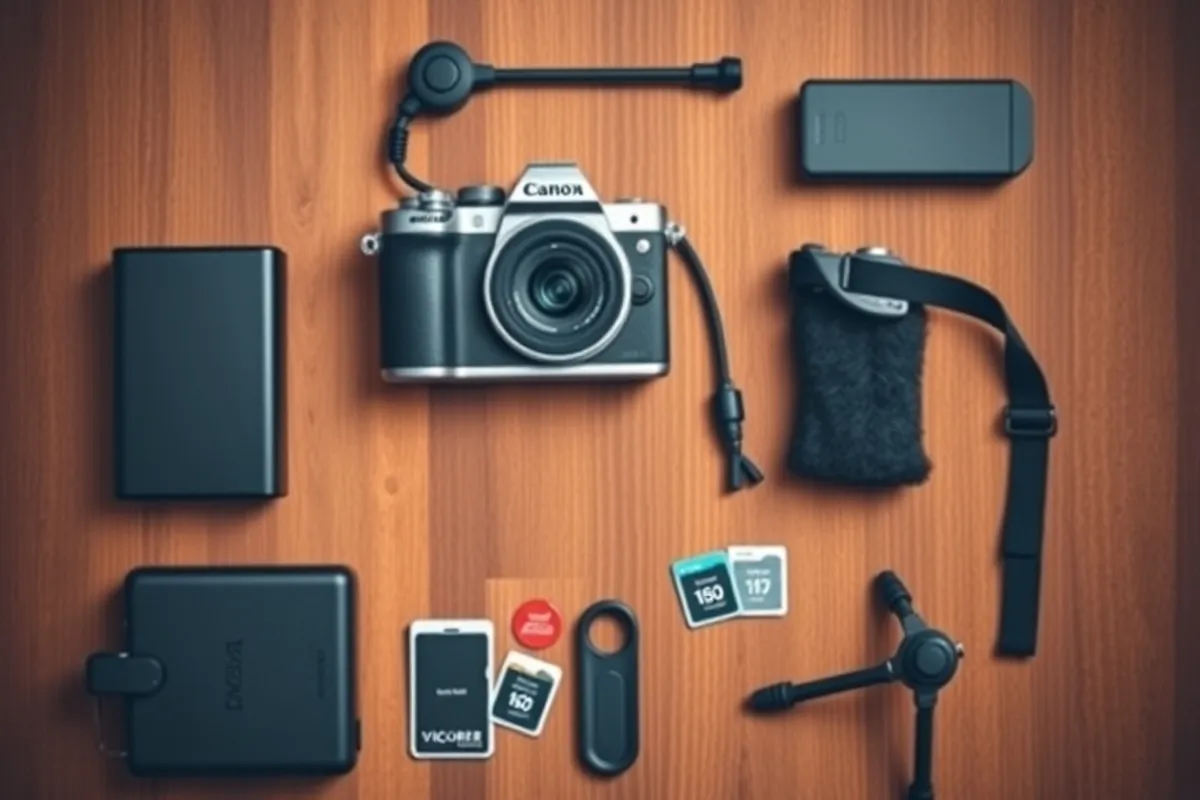
For most travellers the answer is one compact body, one zoom lens, a wireless lavalier, two spare batteries, a large power bank, two fast cards, a pocket tripod and a small clamp. That fits in a daypack and covers almost every story you will want to tell.
If you are weighing two different trips, read our guide to telling a travel story on camera next, then browse the rest of Travel Vlogging for editing and publishing advice.
Official source: cipa.jp.